
Printers for Business Cards: Professional Printing Solutions in Australia
Find reliable printers for business cards across Australia. High-quality printing solutions that make strong first impressions for businesses and professionals.

Written by
Holly Deluca
Stationery & Office
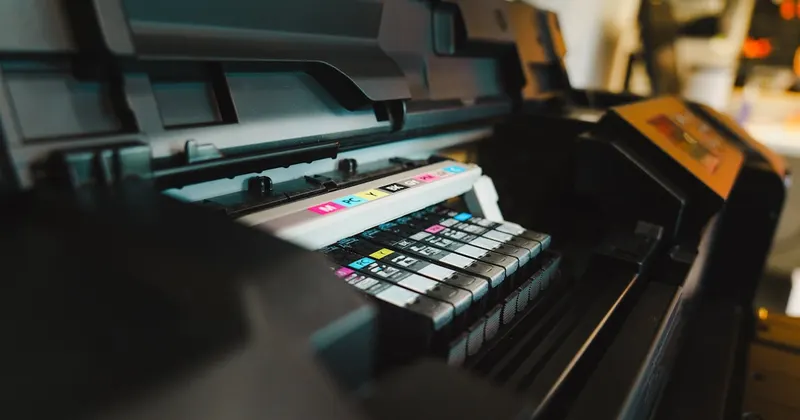
Business cards might seem like a small detail, but they carry enormous weight in a first impression. Whether you’re a sole trader in Adelaide handing them out at a networking breakfast or a Sydney-based corporation distributing thousands at a trade show, the quality of your business cards speaks directly to the professionalism of your brand. Choosing the right printers for business cards — and understanding the full range of printing options, finishes, and formats available — can mean the difference between a card that gets kept and one that ends up in the bin.
This guide is designed to help Australian businesses, schools, and organisations navigate the business card printing landscape with confidence. From decoration methods and material choices to ordering timelines and what to look for in a quality print partner, we’ve covered everything you need to know.
Why Business Cards Still Matter in 2024
In an age of LinkedIn profiles and digital portfolios, the humble business card refuses to die. In fact, for many industries — real estate, finance, healthcare, education, and professional services — a well-designed card remains one of the most effective and personal forms of brand marketing.
The reason is simple: physical touchpoints create lasting impressions. A beautifully crafted business card handed directly to a potential client or partner carries a warmth and intentionality that a digital connection simply cannot replicate. For Australian businesses attending conferences, expos, or client meetings, they remain an essential tool in the professional kit.
Business cards also serve as a portable extension of your brand. A Melbourne architecture firm with a sleek embossed card on heavy stock signals design sensibility before a word is spoken. A Gold Coast real estate agent with full-bleed colour printing and a gloss UV finish stands out in a prospect’s wallet long after the open home has ended.
Understanding Your Options: Types of Printers for Business Cards
When most people search for printers for business cards, they’re really asking two different questions: what printing process should be used, and who should be trusted to do it? Let’s break both down.
Digital Printing
Digital printing is the most widely used method for business cards in Australia. It’s cost-effective, fast, and delivers excellent results for standard designs involving photographs, gradients, or complex artwork. There are no physical plates required, which keeps setup costs low — a significant advantage when ordering smaller quantities.
For small businesses in Brisbane or Darwin ordering 250–500 cards, digital printing is typically the go-to choice. Turnaround times are generally fast, often within 3–5 business days, and the colour reproduction is sharp and reliable.
Offset Printing
Offset printing uses inked plates to transfer images onto the card stock and is better suited to high-volume orders where colour consistency is critical. It delivers a more consistent result across large runs and is particularly effective when PMS (Pantone Matching System) colour accuracy is non-negotiable — such as for corporate brands with strict colour guidelines.
If you’re a Perth-based financial services firm ordering 5,000+ cards for a national team, offset printing offers a superior finish at a lower per-unit cost at scale. The setup time is longer, so factor in at least 7–10 business days.
Letterpress Printing
Letterpress is a premium, artisan method that presses a design into thick card stock, creating a tactile, debossed impression. It’s increasingly popular with boutique businesses, creative agencies, and professionals who want their card to feel as impressive as it looks.
The cost is significantly higher than digital or offset, and MOQs (minimum order quantities) tend to be larger, but the result is genuinely striking. A Hobart-based design studio or a Melbourne wedding planner would find great value in the brand story letterpress can tell.
Foil Stamping and Special Finishes
Beyond the core printing methods, it’s worth understanding what decorative finishes can add to a business card. Options like:
- Foil stamping (gold, silver, or coloured metallic foil applied to specific elements)
- Spot UV coating (a glossy varnish applied to select areas for contrast and shine)
- Soft-touch lamination (a velvety matte finish that’s both tactile and durable)
- Embossing and debossing (raised or recessed text/imagery pressed into the stock)
These techniques elevate a business card from functional to genuinely impressive. They’re particularly popular with law firms, luxury real estate agents, and high-end consultants across Sydney, Melbourne, and Canberra.
Choosing the Right Card Stock and Format
The paper stock your cards are printed on matters just as much as the printing method itself. Here’s a quick overview of the most common options:
Standard Card Stock (300–350gsm)
This is the most common option for everyday business cards. It’s sturdy enough to feel professional without being excessively thick. Most digital print runs use 350gsm gloss or matte coated stock as a baseline.
Premium Thick Stock (400–600gsm)
Thick stock cards feel luxurious in the hand and are harder to bend or crease. Often used with soft-touch lamination or spot UV, they’re ideal for professionals who want their card to communicate premium quality immediately.
Uncoated and Recycled Stock
For organisations prioritising sustainability, uncoated or recycled card stock is a responsible choice. It pairs well with a matte or kraft aesthetic and is increasingly popular with eco-conscious businesses, not-for-profits, and councils. If your brand already invests in sustainable promotional products — such as custom eco-friendly messenger bags for your team or events — matching your stationery to that same ethos makes for a cohesive, values-driven brand presentation.
Non-Standard Shapes and Sizes
While the standard 90mm x 55mm card is the norm in Australia, die-cut cards in rounded corners, square formats, or completely custom shapes can make a memorable impression. Keep in mind that unusual formats may not fit standard cardholders, so consider your audience before going unconventional.
What to Look for When Choosing Printers for Business Cards
Not all print providers are created equal. When evaluating your options, here are the key factors to assess:
Print Quality and Proofing Process
Always request a physical or digital proof before approving a full run. Reputable printers will provide this as standard. Check for colour accuracy, bleed alignment, and text sharpness. If you’re using PMS colours, confirm whether the printer can accommodate spot colour printing or whether the work will be converted to CMYK.
Turnaround Times
Standard turnaround for business cards in Australia typically runs 3–7 business days after artwork approval. If you’re preparing for an event — say, a Brisbane expo or a Canberra government conference — build in at least two weeks to allow for proof reviews and any unexpected delays.
Express services are available from many providers (often at a premium), delivering within 1–2 business days for digital print runs. This can be a lifesaver for last-minute networking events.
Minimum Order Quantities
Most digital print providers offer MOQs as low as 100–250 cards, which suits freelancers and small businesses. Offset print runs typically start at 1,000+ units. If you’re ordering for a team, look for tiered pricing that rewards volume — ordering 500 cards is rarely twice the price of 250.
Artwork Requirements
Prepare your artwork in CMYK colour mode at 300dpi, with a 3mm bleed on all sides and all fonts embedded or outlined. If you’re unsure, most printers will offer a free artwork check before printing begins. Sending print-ready files prevents delays and reduces the risk of colour shifts or blurry text in the final product.
Business Cards as Part of a Broader Corporate Branding Strategy
It’s worth zooming out for a moment. Business cards don’t exist in isolation — they’re one element of a broader branded touchpoint ecosystem. The most effective corporate branding strategies treat every physical item a recipient touches as an opportunity to reinforce identity and values.
If your team is attending a major industry event or conference, business cards should coordinate with other branded materials you’re distributing. Think about the full suite of items your team might hand out: branded power banks for corporate events make a high-impact giveaway that attendees will actually use and keep, helping your brand stay top of mind long after the cards have been filed away.
Similarly, if your organisation is planning an end-of-year function or preparing gift ideas for Christmas, a coordinated approach — where business cards, branded packaging, and premium gifts all speak the same visual language — creates a professional, polished impression that leaves a lasting mark.
For schools, charities, and not-for-profit organisations, business cards for key staff and board members are equally important. A Canberra-based charity hosting a gala fundraiser benefits enormously from having professionally printed cards for leadership team members in circulation. Pairing this with a well-rounded merchandise strategy — as detailed in our guide to promotional products for charity fundraisers in Australia — helps amplify reach and brand recognition within the community.
Practical Tips for Getting the Most Out of Your Business Card Order
Before you place your order, run through this checklist to ensure a smooth process:
- Double-check all contact details — phone numbers, email addresses, website URLs, and LinkedIn profiles. A typo in a print run of 1,000 cards is an expensive mistake.
- Use high-resolution logos — request vector files (AI, EPS, or PDF) from your graphic designer or brand guidelines document to ensure crisp reproduction at any size.
- Approve a proof — never skip the proofing stage, even if you’re in a hurry.
- Order a buffer — always order 10–15% more cards than you think you’ll need. Running out at a key event is frustrating, and reprints take time.
- Consider double-sided printing — the back of your card is prime real estate. Use it for a QR code, a tagline, social media handles, or a key service summary.
- Store cards properly — keep them in a card case or box to prevent curling, scratching, or moisture damage before distribution.
Conclusion: Making the Right Call on Printers for Business Cards
Finding the right printers for business cards comes down to understanding your needs, your brand standards, and the impression you want to create. For everyday professional use, high-quality digital printing on premium stock with a thoughtful finish is more than sufficient — and accessible at a budget that suits most Australian businesses. For premium sectors or high-volume corporate requirements, exploring offset printing, letterpress, or specialty finishes can elevate your card from ordinary to genuinely memorable.
Here are the key takeaways to guide your decision:
- Match the printing method to your volume and budget — digital for small runs, offset for large volumes, letterpress for premium impact.
- Don’t underestimate the power of card stock and finish — thickness, lamination, and special coatings communicate brand quality before anyone reads a word.
- Always proof before printing — a few extra hours in the approval stage can save you from costly reprints.
- Integrate your business cards into a broader branding strategy — they work best when they complement your other branded materials and touchpoints.
- Plan ahead for events — allow at least two weeks from artwork submission to delivery when ordering for conferences, expos, or networking events.
A business card is small, but its impact can be significant. Invest in getting it right, and it will continue working for your brand long after the handshake is over.