
Eco Friendly Promotional Items: The Complete Guide for Australian Organisations
Discover the best eco friendly promotional items for Australian businesses, schools & events. Tips on products, budgets, decoration & ordering.

Written by
Mabel Hayes
Eco & Sustainable Products
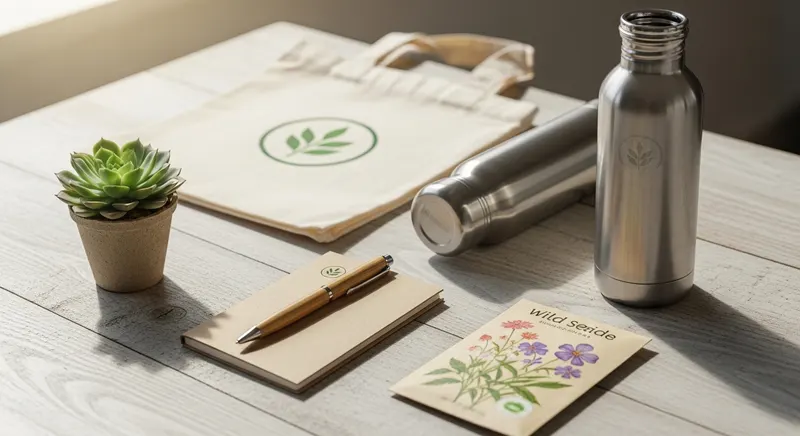
Choosing eco friendly promotional items is no longer just a feel-good decision — it’s a strategic one. As sustainability moves to the top of the agenda for Australian businesses, schools, and government organisations alike, the demand for branded merchandise that reflects genuine environmental values has never been higher. Whether you’re planning a corporate conference in Melbourne, a school fundraiser on the Gold Coast, or a trade show presence in Sydney, the right eco-friendly promo products can amplify your brand message and demonstrate that your organisation walks the talk. This guide covers everything you need to know to make smart, sustainable choices.
Why Eco Friendly Promotional Items Matter in 2026
The shift towards sustainable merchandising isn’t a trend — it’s a fundamental change in how Australian organisations approach brand promotion. Consumers, employees, and stakeholders are increasingly scrutinising the environmental footprint of the organisations they support, and branded merchandise is no exception.
Research consistently shows that recipients are more likely to keep and use promotional products they perceive as useful and environmentally responsible. A well-chosen eco-friendly item sits on a desk, gets carried to the gym, or travels to work every day — generating ongoing brand impressions without generating unnecessary waste. That’s a powerful return on investment.
For organisations sourcing wholesale promotional products in Melbourne or coordinating large-scale procurement across multiple Australian states, building a sustainable merchandise catalogue also simplifies procurement decisions and aligns with corporate social responsibility (CSR) reporting requirements.
The Environmental Case for Sustainable Merch
Conventional promotional products are often made from virgin plastics, non-recyclable composites, or materials with significant manufacturing footprints. Eco-friendly alternatives address this by incorporating:
- Recycled materials — from post-consumer plastic bottles, recycled cotton, or reclaimed rubber
- Renewable materials — bamboo, cork, organic cotton, and FSC-certified paper
- Reusable formats — products designed to replace single-use items, like keep cups, tote bags, and stainless steel drink bottles
- Biodegradable options — seed paper, plant-based plastics, and compostable packaging
Each category has its own strengths depending on your audience, budget, and campaign goals — and understanding those differences is essential to making the right choice.
Top Categories of Eco Friendly Promotional Items
Navigating the sustainable merch landscape can feel overwhelming, especially when so many suppliers now claim to offer “green” products. Let’s break down the most practical and popular categories for Australian organisations in 2026.
Recycled and Reusable Bags
Bags remain one of the most popular promotional products in Australia, and the eco-friendly category is particularly strong here. Reusable tote bags made from recycled materials are a staple for grocery stores, event organisers, and corporate gifting campaigns.
Recycled cotton branded tote bags for grocery stores are an excellent example of how sustainable merchandising can serve a practical, everyday purpose. Every time a customer reaches for that bag at the checkout, your brand gets a moment in the spotlight — without the environmental cost of a plastic bag.
For events and conferences, branded waterproof bags made from recycled PET or sustainable fabrics are increasingly popular as delegate gifts. They’re durable, functional, and signal genuine environmental commitment to attendees.
Wine carrier bags — particularly popular for corporate gifting in Queensland — are also available in recycled and FSC-certified materials. If you’re exploring promotional wine carrier bags in Brisbane, sustainable options are widely available and add a premium feel to the gifting experience.
Eco-Friendly Drinkware
Perhaps no category has benefited more from the sustainability movement than drinkware. Reusable coffee cups, stainless steel water bottles, and bamboo travel mugs have replaced single-use alternatives in offices, schools, and event settings across Australia.
Key considerations when choosing eco-friendly drinkware include:
- Material origin — is the stainless steel recycled? Is the bamboo sustainably sourced?
- Decoration method — laser engraving is the gold standard for eco-friendly branding, as it uses no inks or chemicals and creates a permanent, elegant result
- Durability — the longer the product lasts, the lower its effective environmental footprint
Bamboo and Natural Material Stationery
Bamboo is one of the fastest-growing natural materials on earth, making it a genuinely sustainable choice for branded stationery. Bamboo pens, notebooks, rulers, and desk accessories are widely available and often priced competitively with their plastic equivalents.
Recycled paper notebooks, seed paper cards, and FSC-certified printed materials are also excellent choices for conferences and school events. If you’re searching for sustainable options when looking up a stationery store near me, ask specifically about recycled content certifications and eco-credentials before committing to an order.
Recycled Tech Accessories
Tech accessories are in high demand for corporate gifting and event giveaways, but they’ve historically been associated with plastic waste and short product lifespans. The good news is that the sustainable tech category has expanded significantly.
Promotional USB sticks are now available in bamboo, recycled plastic, and wheat straw composites — materials that maintain full functionality while reducing environmental impact. Recycled material branded mouse pads for offices are another smart choice, offering everyday desk presence with a sustainability story built right into the product.
Eco-Friendly Apparel
Custom clothing is one of the most visible forms of branded merchandise, and choosing sustainable fabrics makes a significant statement. Organic cotton, recycled polyester (RPET), and Tencel-based garments are all available from reputable Australian suppliers.
Whether you’re ordering work shirts with your logo for a team or custom shirts for a school event, there are sustainable alternatives in most common styles and cuts. Embroidery is often preferred over screen printing for eco-conscious apparel orders, as it eliminates the use of plastisol inks and produces a long-lasting decoration that doesn’t crack or fade.
Hi-vis workwear is also available in sustainable materials — an important consideration for construction and infrastructure organisations. Combined with other safety-focused items like promotional safety whistles for construction companies, a sustainable workwear kit demonstrates commitment to both environmental and worker safety values.
Practical Tips for Ordering Eco Friendly Promotional Items
Understanding what to look for in sustainable products is only half the challenge. Here’s how to navigate the ordering process effectively.
Understand Minimum Order Quantities
Eco-friendly products often carry slightly higher per-unit costs than conventional alternatives, especially at lower quantities. Understanding minimum order quantities for custom merchandise is essential to budgeting accurately. Many sustainable product lines have MOQs of 50–250 units depending on the item, though this varies considerably by supplier and product type.
For schools and smaller organisations, this can feel restrictive — but it’s worth noting that eco-friendly products often command stronger recipient engagement, which improves the overall cost-effectiveness of your campaign.
Ask the Right Questions About Sustainability Claims
“Greenwashing” — where products are marketed as eco-friendly without substantive credentials — is a genuine concern in the promotional products industry. When evaluating suppliers and products, ask:
- What percentage of the material is recycled or sustainably sourced?
- Are there third-party certifications (e.g., GRS, FSC, OEKO-TEX, organic certification)?
- What is the manufacturing country of origin, and what environmental standards apply there?
- Is the product designed for longevity, or is it likely to end up in landfill after a short time?
A reputable supplier will be transparent about these details. If you’re exploring recycled promotional items for eco-conscious brands, this kind of due diligence will ensure your investment genuinely reflects your values.
Plan Your Decoration Method Carefully
Decoration method matters enormously for eco-friendly merchandise. Some sustainable materials — like bamboo and cork — are not suitable for screen printing but work beautifully with laser engraving or pad printing. Others, like organic cotton bags, are ideal for water-based screen printing or digital printing, both of which have lower environmental impact than solvent-based methods.
Work with your supplier to match the right decoration method to your chosen product, and always request a proof before approving production.
Allow Adequate Lead Time
Eco-friendly promotional products can sometimes have longer lead times than conventional items, particularly if they’re being sourced from certified sustainable supply chains. For busy periods like the end of financial year, Christmas, and the start of the school year, plan at least 4–6 weeks ahead. For large or complex orders, 8–10 weeks is a safer buffer.
If you’re coordinating merchandise for trade show stand appearances or need to manage trade show booth display ideas, factor sustainable product lead times into your overall event planning timeline.
Matching Eco Friendly Products to Your Audience
Not every sustainable product suits every audience. Here’s a quick guide to matching your eco-friendly item selection to your specific stakeholder group:
- Corporate clients and staff — premium reusable drinkware, bamboo stationery sets, recycled tech accessories, organic cotton apparel
- Schools and universities — reusable water bottles, organic cotton tote bags, seed paper bookmarks, recycled pencil cases
- Trade shows and expos — lightweight recycled tote bags, bamboo pens, seed paper with brand messaging, eco-friendly lanyards
- Sporting clubs and outdoor events — RPET drink bottles, recycled gym towels (see our guide to towels for gym branding), bamboo sunglasses cases
- Retail and hospitality — reusable coffee cups, custom summer products made in Australia with sustainable credentials, printed stubby coolers made from recycled neoprene
Conclusion: Key Takeaways for Sourcing Eco Friendly Promotional Items
Sustainable branded merchandise is one of the most powerful ways Australian organisations can align their marketing spend with their values — and deliver genuine impact at the same time. Here are the essential points to carry away:
- Prioritise durability and function — the most eco-friendly promotional item is one that gets used every day, not one that sits in a drawer or ends up in landfill
- Ask for certifications — GRS, FSC, OEKO-TEX, and organic certifications provide genuine assurance that sustainability claims are credible
- Match materials to decoration methods — laser engraving, water-based inks, and embroidery are the most environmentally responsible options for most eco-friendly products
- Plan ahead — sustainable supply chains sometimes take longer; build adequate lead time into your procurement schedule
- Think beyond the product — consider sustainable packaging, reduced excess stock ordering, and carbon offset options to round out your environmental commitment
Eco friendly promotional items are no longer a niche choice — they’re the benchmark that Australian businesses, schools, and organisations are increasingly expected to meet. With the right knowledge and a thoughtful approach to product selection, your next branded merchandise campaign can be as good for the planet as it is for your brand.