
How Sublimation Printing Works on Promotional Drinkware: A Complete Guide
Discover how sublimation printing works on promotional drinkware and whether it's right for your next branded merchandise order in Australia.

Written by
Lydia Park
Branding & Customisation
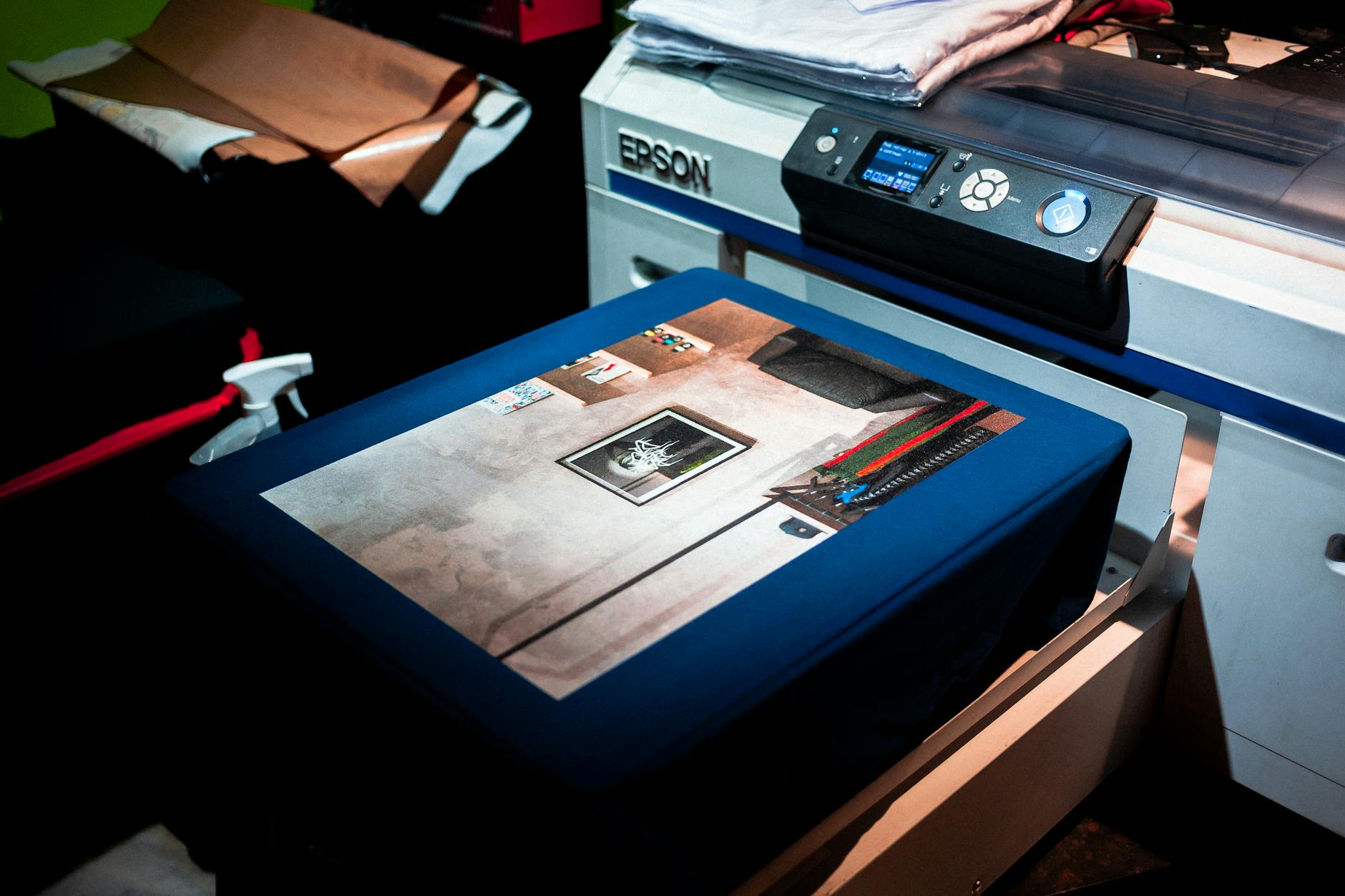
If you’ve ever held a promotional mug or water bottle covered in a vibrant, full-colour design that seems almost painted onto the surface, there’s a good chance sublimation printing was involved. It’s one of the most visually striking decoration methods available for branded drinkware — and yet, for many businesses, schools, and event organisers across Australia, it remains something of a mystery. Understanding how sublimation printing works can make a significant difference when you’re planning a custom merchandise order, helping you choose the right product, the right process, and ultimately get the best results for your budget.
What Is Sublimation Printing and How Does It Work?
Sublimation printing is a heat-based decoration process that transfers dye directly into the surface of a substrate — rather than sitting on top of it like a standard ink print. The word “sublimation” refers to the scientific process where a solid converts directly into a gas without passing through a liquid state. In practical terms, this means the dye transitions from a solid (in the printed transfer paper) into a gaseous state under heat and pressure, bonding permanently with the material at a molecular level.
Here’s how the process unfolds step by step:
Step 1: Design Preparation
The artwork is created digitally and printed in reverse (mirrored) onto a special transfer paper using sublimation inks. This is where colour accuracy matters enormously. Because sublimation inks can behave differently from standard CMYK printing, experienced decorators will colour-profile their files carefully to ensure what appears on screen matches the finished product. If you’re working with specific brand colours, it’s worth noting that sublimation doesn’t support PMS colour matching in the traditional sense — results are achieved through colour profiling rather than spot colour mixing.
Step 2: Preparation of the Drinkware
The drinkware item — typically a ceramic mug, stainless steel bottle, or aluminium travel tumbler — must have a special polyester coating applied to its surface. This coating is the key to why sublimation works. Without it, the dyes have nothing to bond to. This is why sublimation cannot be applied to uncoated glass, natural-finish metals, or standard plastic without pre-treatment. When sourcing your drinkware, always confirm that items are “sublimation ready” or coated for sublimation printing.
Step 3: Heat Transfer
The printed transfer paper is wrapped tightly around the drinkware and secured before being placed into a heat press or wrap oven. Temperatures typically reach between 180°C and 200°C, and the process is held for a set time — often 60 to 90 seconds for cylindrical items. Under this heat and pressure, the sublimation inks convert to gas and penetrate the polyester coating, bonding permanently with the substrate.
Step 4: Cooling and Finishing
Once removed from the heat press, the transfer paper is peeled away to reveal the finished design. The result is a smooth, full-colour image that is part of the drinkware itself — it won’t crack, peel, or fade with regular use and dishwashing (though hand washing is still recommended for longevity).
Why Sublimation Is Ideal for Promotional Drinkware
Understanding how sublimation printing works also helps explain why it’s such a popular choice for branded drinkware specifically. Unlike screen printing — which is better suited to flat surfaces and single or limited colour designs — sublimation excels at full-colour, photographic, or gradient-heavy artwork across curved and cylindrical surfaces.
Full 360-Degree Decoration
One of the standout advantages of sublimation on drinkware is the ability to wrap a design completely around the item. A Sydney events company ordering branded travel tumblers for a gala dinner, for example, could cover the entire surface with their brand imagery, colour gradients, sponsor logos, and event messaging — all in one seamless design. There are no “print areas” to work within the way there are with pad printing or screen printing.
Exceptional Colour Vibrancy and Detail
Sublimation reproduces photographic detail, fine gradients, and complex multi-colour artwork with exceptional clarity. This makes it a favourite for:
- Schools wanting vibrant, fun designs on student water bottles
- Sports teams after full-colour jerseys and drinkware that match their club colours
- Corporates showcasing detailed brand imagery or photography on premium gifting items
- Events and conferences needing standout branded merchandise
A Brisbane primary school running their annual sports carnival, for instance, might order sublimated drink bottles in each house colour, with the school crest and event year printed in stunning detail across the full surface — something that would be impossible to achieve with a single-colour pad print.
Durability That Outlasts Other Methods
Because the dye becomes part of the surface rather than sitting on top of it, sublimated designs are highly resistant to fading, scratching, and peeling. For promotional drinkware that will see daily use — commuter mugs, gym bottles, office keep cups — this durability is a significant selling point. It ensures your brand remains visible long after the product leaves your hands, which is ultimately what good promotional merchandise is all about. For more insights into choosing the right products for lasting brand impact, our guide on recycled promotional items for eco-conscious brands covers some excellent complementary options.
What Drinkware Products Are Compatible With Sublimation?
Not all drinkware can be sublimated. Here’s a quick breakdown of what works — and what doesn’t.
Suitable for Sublimation
- Coated ceramic mugs — the most common sublimation product; the white polyester coating absorbs dye beautifully
- Coated stainless steel tumblers and travel mugs — must have a sublimation-ready outer coating
- Aluminium drink bottles — widely used for schools and sporting clubs
- Sublimation-coated plastic bottles — less common but available for lower-budget applications
Not Suitable for Sublimation (Without Special Coating)
- Uncoated or dark-coloured ceramics — sublimation dyes are translucent, so dark base colours will distort the design
- Raw stainless steel — the dye has nothing to bond to
- Standard glass — requires specific coating and isn’t widely done in Australia at volume
This is an important consideration when planning your order. If you’re already thinking about placing a large bulk order, our article on understanding minimum order quantities for custom merchandise is a helpful starting point before you commit.
Sublimation vs Other Drinkware Decoration Methods
Businesses and schools often ask how sublimation compares to other popular decoration methods for drinkware. Here’s a practical overview:
| Method | Best For | Limitations |
|---|---|---|
| Sublimation | Full-colour, all-over designs on coated items | White or light base required |
| Pad Printing | Simple logos, 1–4 colours, cost-effective | Limited print area, no gradients |
| Screen Printing | Bold single-colour or spot colour designs | Not ideal for curved surfaces |
| Laser Engraving | Premium, permanent branding on metal/glass | Single colour (reveal), no full-colour |
| Digital Printing | Short run, detailed labels on flat surfaces | Less durable on drinkware specifically |
For a Perth-based corporate gifting campaign where the client wants sleek, monochrome branding on stainless steel bottles, laser engraving might actually be more appropriate than sublimation. However, for a Melbourne conference needing 500 branded keep cups with a colourful, detailed design to sit at each delegate’s seat, sublimation would be the clear winner.
Practical Considerations for Your Sublimation Order
Artwork Requirements
Sublimation printing requires high-resolution artwork — ideally 300 DPI at print size — in a format like PDF, AI, or PSD with colour profiles set correctly. Because designs wrap around the full surface, your decorator will often request a “wrap template” to be followed during design. If you’re working with a designer, share the template dimensions early in the process.
Turnaround Times
In Australia, sublimated drinkware typically carries a production turnaround of 7 to 15 business days after artwork approval, depending on the supplier and order volume. If you’re ordering for a specific event or deadline — say, a Gold Coast corporate conference or an Adelaide school fundraiser — always factor in delivery time on top of production. Rush orders may be available at an additional cost.
Minimum Order Quantities
Sublimation on drinkware generally has a lower MOQ than some other decoration methods, with many suppliers offering runs from as few as 12 to 25 units. However, for the best per-unit pricing, orders of 50 to 100 units and above tend to hit more attractive price breaks. This makes sublimated drinkware accessible to small sporting clubs and community groups, not just large corporations.
Budget Expectations
Sublimated drinkware sits in the mid-to-premium price range compared to pad-printed equivalents. A coated ceramic mug with full-colour sublimation wrap might cost anywhere from $8 to $18 per unit depending on volume, while a sublimated stainless steel travel tumbler could range from $15 to $35 or more. The investment is often justified by the visual impact and durability of the final product.
If you’re building out a broader event merchandise toolkit, it’s worth exploring ideas from our trade show booth displays ideas post or our guide on summer custom products for Australia — both of which pair beautifully with sublimated drinkware as part of a cohesive brand experience.
For organisations balancing a tight budget across multiple product categories — say, a charity running a fundraiser that also needs promotional items beyond drinkware — our guide on promotional products for charity fundraisers in Australia offers practical direction. And if your school or community organisation is sourcing branded items for younger audiences, our roundup of promotional products for kids in Australia covers some great sublimation-compatible options.
It’s also worth considering how sublimated drinkware fits within a broader branded product strategy. Promotional merchandise is most effective when it’s part of a considered approach — something we explore in depth in our promotional products market research for Australia article.
Conclusion: Key Takeaways on Sublimation Printing for Drinkware
Understanding how sublimation printing works on promotional drinkware gives you a real advantage when planning your next branded merchandise campaign. It’s a powerful, versatile, and durable decoration method — but like any process, it works best when matched to the right product, the right design, and the right application.
Here are the most important things to take away:
- Sublimation bonds dye into the surface, not onto it — resulting in vibrant, long-lasting prints that won’t crack or peel
- The drinkware must be coated — white or light-coloured items with a polyester coating are essential for successful results
- Full-colour and all-over designs are sublimation’s greatest strength — it outperforms other methods for complex, gradient-heavy, or photographic artwork
- MOQs can be as low as 12–25 units, making it accessible for schools, small businesses, and community organisations as well as large corporate orders
- Artwork quality and file preparation are critical — work with your decorator early and follow their templates to ensure the best possible outcome
Whether you’re a Canberra government department sourcing branded keep cups for a sustainability initiative, a Hobart school fundraising committee ordering vibrant student water bottles, or a Darwin corporate team putting together premium conference gifts, sublimation printing is well worth considering for your next drinkware order.